New York City is the advertising capital of the world — and right in the middle of its busiest streets, over 13,000 yellow medallion taxis serve as mobile billboards that reach millions of eyes every single day. Taxi advertising in NYC is not a new concept, but the technology, targeting capabilities, and measurement tools available in 2026 have transformed it into one of the most efficient and data-driven out-of-home (OOH) advertising channels available to marketers.
Whether you are a local business looking to drive foot traffic, a national brand building awareness in the country's largest metro area, or an agency evaluating media mix options for a client, this guide covers everything you need to know about advertising on New York City taxis — from formats and pricing to regulations, performance metrics, and real-world strategy.
Why Advertise on NYC Taxis?
Before diving into formats and pricing, it helps to understand why taxi advertising holds such a unique position in the NYC media landscape.
Unmatched Urban Reach
New York City's 13,000+ yellow cabs log more than 12.5 million trips per month across all five boroughs. They operate 24 hours a day, 7 days a week, covering the most heavily trafficked corridors in the country — from Times Square and Fifth Avenue to the bridges, tunnels, and outer borough streets where billboard inventory is scarce. A single taxi generates between 40,000 and 70,000 impressions per day, and a fleet campaign can deliver hundreds of millions of monthly impressions at a fraction of the cost of static billboards or digital spectaculars.
A Captive and Diverse Audience
NYC taxi advertising reaches a remarkably diverse audience. Pedestrians, other drivers, bus riders, cyclists, tourists, and the 8.3 million residents who live here all see taxi top ads throughout their daily routines. According to industry data, 61% of urban residents use taxis at least once a year, and a third use them at least once a month. Interior ads reach a truly captive audience — passengers who spend an average of 15 to 20 minutes per ride with the ad directly in front of them.
Cost Efficiency
Compared to other OOH formats in NYC, taxi advertising offers some of the lowest CPMs (cost per thousand impressions) in the market. Static taxi tops can deliver CPMs as low as $0.10 to $0.30, while even digital taxi tops with GPS targeting remain competitive at $4 to $12 CPM — far below the $20+ CPMs typical of premium digital billboards in Manhattan.
Types of NYC Taxi Advertising
There are four primary formats for advertising on New York taxis, each with different price points, reach characteristics, and use cases.
1. Digital Taxi Top Displays (LED Screens)
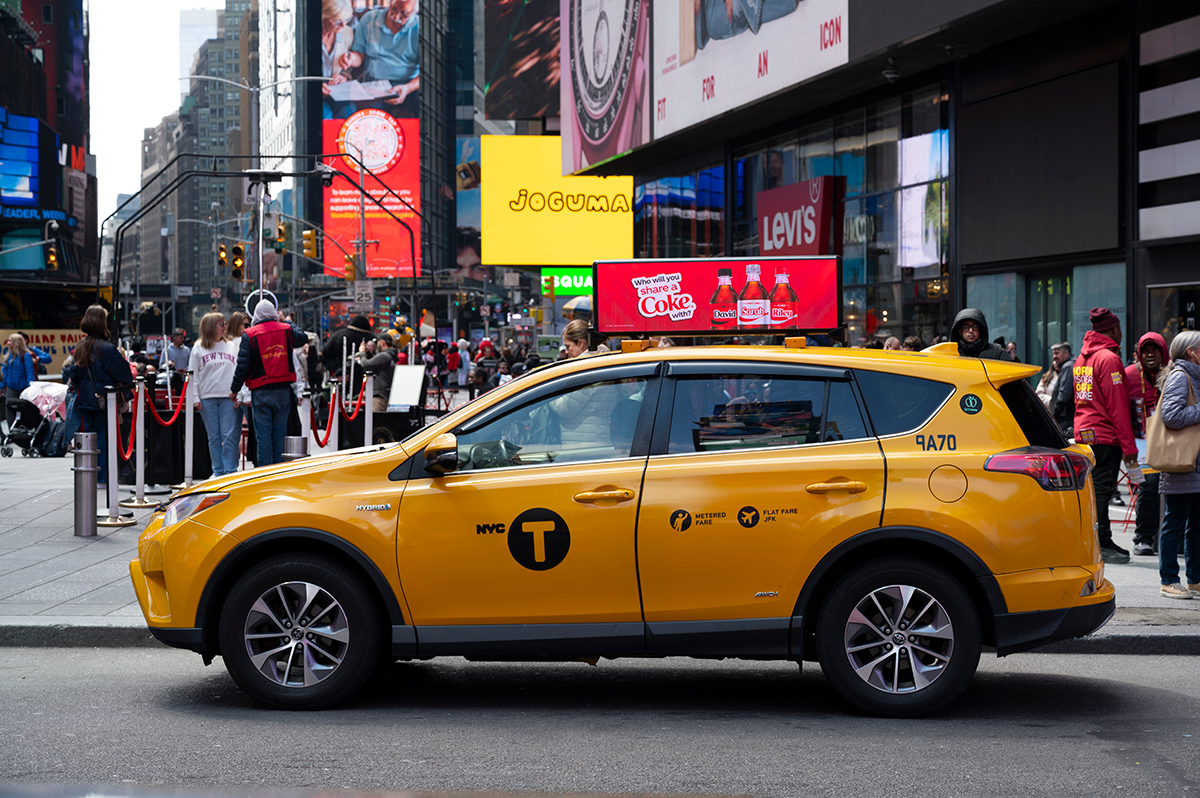
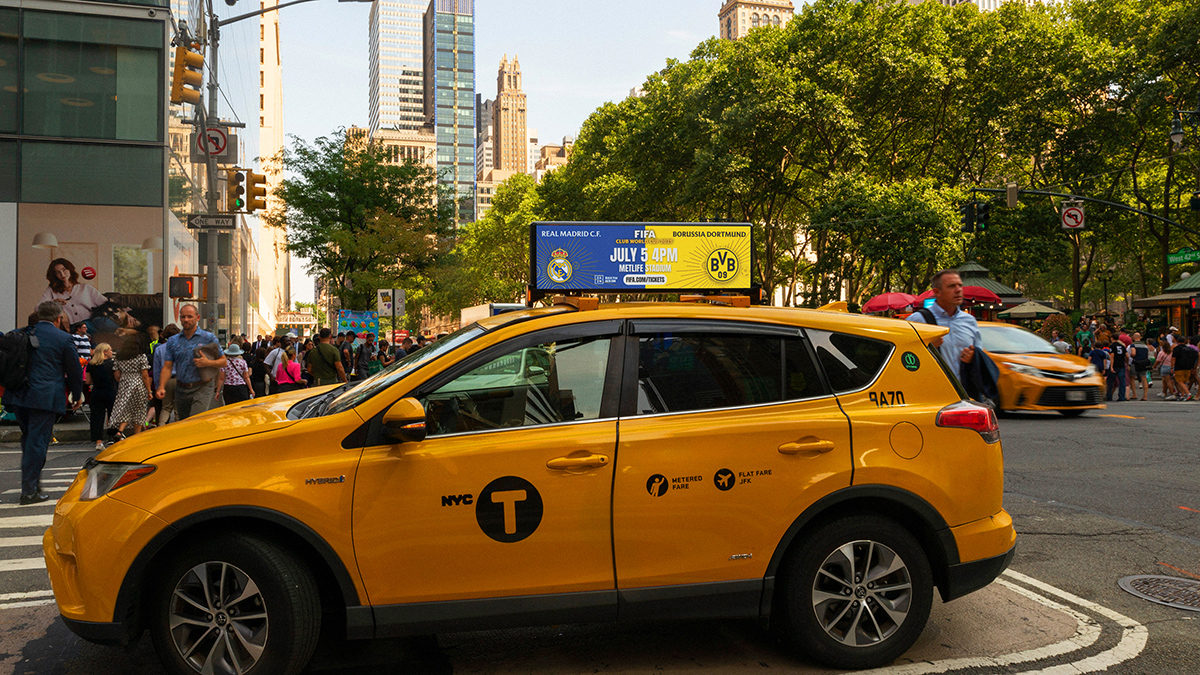
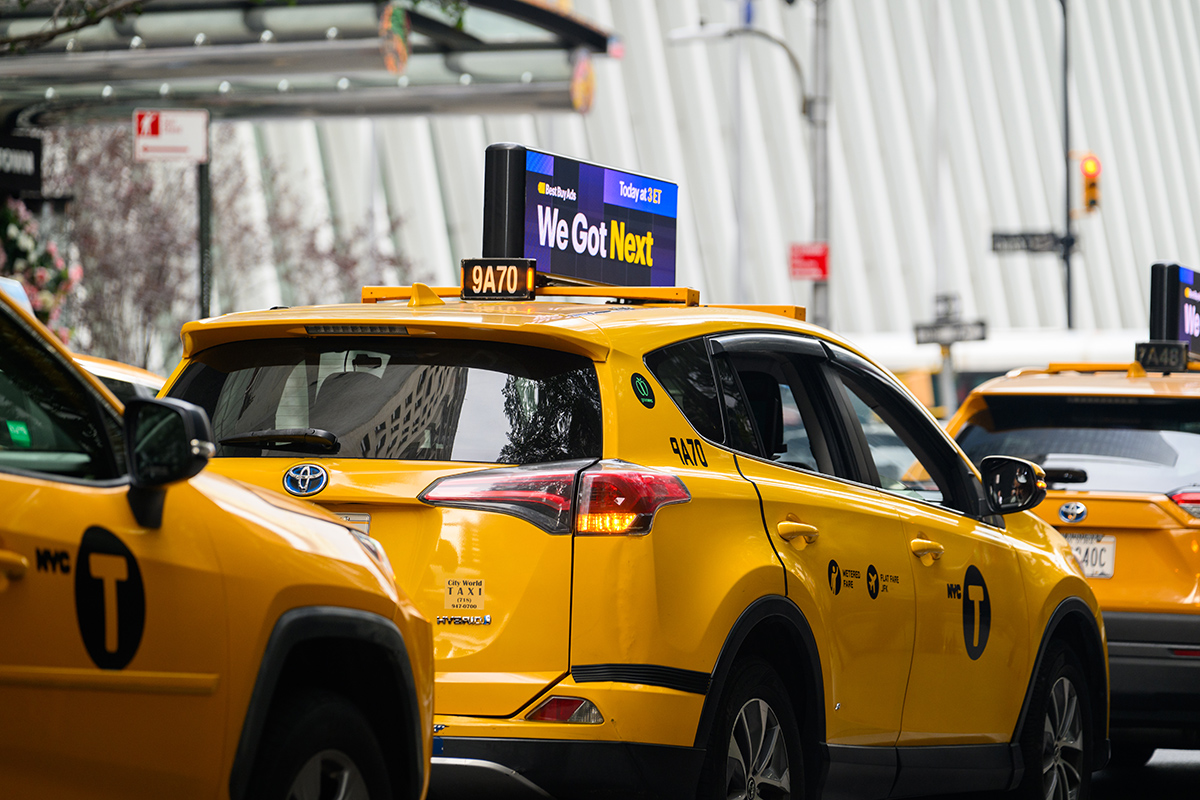
Digital taxi tops are the fastest-growing format in the NYC taxi advertising market. Companies like Firefly and Curb operate networks of GPS-tracked LED screens mounted on taxi rooftops that display rotating full-color ads. These screens can serve different creatives based on the vehicle's real-time location, time of day, weather conditions, and audience data.
- Cost: $1,000 – $2,500 per vehicle per month; programmatic buys available at $4 – $12 CPM
- Impressions: 50,000 – 70,000 daily per vehicle
- Key advantage: GPS-based geographic targeting, dayparting, real-time creative rotation, and verified impression reporting
- Best for: Targeted campaigns, event promotions, time-sensitive offers, brands that need measurable results
2. Static Taxi Top Displays
The classic illuminated taxi topper — a backlit acrylic box displaying printed ad panels on two or four sides. Static tops have been a NYC fixture since the 1980s and remain a cost-effective option for broad awareness campaigns.
- Cost: $100 – $400 per vehicle per month (plus $50 – $150 production per unit)
- Impressions: 40,000 – 60,000 daily per vehicle
- Key advantage: Extremely low CPM ($0.10 – $0.30), 24/7 visibility, no ad rotation — your brand gets 100% share of voice
- Best for: Long-running brand awareness campaigns, local businesses, budget-conscious advertisers
3. Full and Partial Taxi Wraps
Vehicle wraps transform the entire taxi — or a significant portion of it — into a branded mobile billboard. Full wraps cover the hood, doors, trunk, and sometimes the roof, creating maximum visual impact. Partial wraps cover specific sections like doors or the trunk area.
- Cost: $1,500 – $2,000 per vehicle for full wraps; approximately $150 per vehicle for trunk-only placements
- Impressions: Highest attention-grabbing potential of any taxi format
- Key advantage: Massive creative canvas, impossible to ignore, 97% message recall rate (vs. 19% for stationary ads)
- Best for: Product launches, entertainment releases, high-impact campaigns that demand attention
4. Interior Ads (Taxi TV and Seat-Back Screens)
Interior advertising includes digital screens mounted on the partition behind the driver's seat (Taxi TV) and seat-back displays. These reach a captive audience — the passenger — for the duration of the ride.
- Cost: Starting at approximately $30 per vehicle; digital screen placements vary based on impression volume
- Impressions: Lower volume but extremely high engagement — passengers actively watch during rides
- Key advantage: Captive audience with average 15-20 minute viewing time, interactive capabilities
- Best for: App downloads, QR code campaigns, direct response advertising
Pros and Cons of NYC Taxi Advertising
Like any advertising medium, taxi ads have distinct advantages and limitations. Here is an honest assessment.
Pros
- Massive daily reach — Each vehicle delivers 40,000–70,000 impressions daily across the most densely populated city in the U.S.
- 24/7 exposure — NYC taxis operate around the clock, meaning your ad works while you sleep
- Lowest CPMs in OOH — Static taxi tops offer CPMs as low as $0.10, making them one of the cheapest impression sources in any advertising channel
- No ad blockers — Unlike digital advertising, OOH cannot be skipped, blocked, or scrolled past
- Geographic flexibility — Digital taxi tops can target specific neighborhoods, zip codes, and routes in real time
- High recall rates — Mobile advertising achieves 97% message recall compared to 19% for stationary ads
- Diverse audience — Reaches tourists, commuters, residents, business travelers, and pedestrians across all demographics
- Brand prestige — Being seen on NYC's iconic yellow cabs carries an implicit association with the energy and scale of New York City
Cons
- Limited creative space — Taxi tops have a small display area compared to billboards, requiring concise messaging
- No guaranteed routes — Taxis go where passengers need them, so you cannot control exactly which streets your ad appears on (though digital targeting mitigates this significantly)
- Weather exposure — Physical ads are exposed to rain, snow, and sun, requiring durable materials and occasional replacement
- Regulatory restrictions — The NYC TLC has content guidelines that prohibit certain ad categories (political ads, discriminatory content, etc.)
- Minimum campaign lengths — Most providers require a minimum 4-week commitment
- Measurement limitations (static) — Static taxi tops rely on estimated impressions rather than verified data; digital formats solve this with GPS tracking
- Competition from rideshare — Uber and Lyft have reduced yellow cab ridership, though the taxi fleet remains large and highly visible on NYC streets
NYC TLC Regulations for Taxi Advertising
The New York City Taxi and Limousine Commission (TLC) regulates all advertising on licensed vehicles. Key rules include:
- Content restrictions: Political advertising, content promoting illegal activities, and ads containing discriminatory or hate speech are prohibited
- Display specifications: Digital displays must meet brightness limits to avoid driver distraction and comply with size requirements
- Approval process: All taxi advertising content must be approved through the TLC or its authorized advertising partners
- Interior advertising rules: In-vehicle advertising technology (IVAT) must comply with TLC's specific guidelines for screen placement, audio levels, and passenger opt-out capabilities
Working with an established taxi advertising provider ensures that your campaign meets all regulatory requirements. Companies like Firefly, Curb, and NY Taxi Ads handle the compliance process as part of their service.
How Much Does NYC Taxi Advertising Cost? A Complete Breakdown
| Format | Cost Per Vehicle/Month | Daily Impressions | CPM | Minimum Campaign |
|---|---|---|---|---|
| Static Taxi Top | $100 – $400 | 40,000 – 60,000 | $0.10 – $0.30 | 4 weeks |
| Digital Taxi Top (LED) | $1,000 – $2,500 | 50,000 – 70,000 | $4 – $12 | 2 weeks |
| Full Vehicle Wrap | $1,500 – $2,000 | Highest impact | $0.15 – $0.48 | 4 weeks |
| Trunk Ad (Static) | ~$150 | Variable | Low | 4 weeks |
| Interior Screen (Taxi TV) | From $30 | Captive audience | Variable | 4 weeks |
Sample campaign budget: A 25-vehicle digital taxi top campaign in Manhattan runs approximately $25,000 – $62,500 per month and delivers an estimated 37.5 million – 52.5 million monthly impressions. The same budget in static taxi tops could cover 60–100+ vehicles and deliver 72 million – 180 million monthly impressions with broader but untargeted reach.
Digital Taxi Top Targeting: How It Works
The targeting capabilities of digital taxi top networks have made NYC taxi advertising a precision medium rather than just a brute-force awareness play. Here is what modern platforms offer:
- Geofencing: Serve ads only when the taxi enters designated neighborhoods — a restaurant in SoHo can restrict its campaign to a 10-block radius, while a Broadway show targets the Theater District during evening hours
- Dayparting: Run breakfast ads in the morning commute, lunch specials at midday, and nightlife promotions after 8 PM — all on the same vehicle
- Weather triggers: Automatically serve weather-appropriate creatives — umbrellas when it rains, sunglasses when it is sunny, hot coffee when temperatures drop
- Event targeting: Increase frequency around MSG, Barclays Center, or MetLife Stadium during major events
- Sequential messaging: Tell a multi-part brand story as the taxi moves through different neighborhoods
- Programmatic buying: Purchase taxi top impressions through DSPs (demand-side platforms) alongside your digital campaigns, enabling unified cross-channel attribution
Measuring NYC Taxi Advertising Performance
One of the biggest shifts in taxi advertising over the past few years has been the improvement in measurement and attribution. Here are the metrics available in 2026:
- Verified impressions: GPS tracking records exactly where every impression was delivered, providing accurate impression counts rather than estimates
- Route heatmaps: Visual dashboards showing exactly which streets, neighborhoods, and intersections received the most exposure
- Foot traffic attribution: Mobile device ID matching connects taxi top exposure to subsequent store visits, using anonymized location data
- Website lift: Measure increases in branded search traffic and direct website visits correlated with campaign flight dates and geographic zones
- Cross-channel attribution: Integration with programmatic platforms enables you to see how taxi top exposure influenced digital ad performance, social engagement, and conversion rates
Who Should Advertise on NYC Taxis?
Taxi advertising in New York works for a wide range of advertisers, but certain categories see particularly strong results:
- Restaurants and hospitality: Geofenced taxi top ads near your location drive immediate foot traffic
- Entertainment and events: Broadway shows, concerts, museum exhibitions, and sporting events benefit from the high-frequency, location-targeted nature of taxi ads
- Retail: Drive awareness and store visits for flagship locations in Manhattan, SoHo, Fifth Avenue, and other shopping districts
- Real estate: Promote new developments, open houses, and luxury listings in specific neighborhoods
- Tourism and travel: Reach the 60+ million annual tourists who visit NYC — taxi ads are often the first advertising they see after leaving the airport
- Tech and apps: Interior Taxi TV screens with QR codes are highly effective for app download campaigns targeting a captive, phone-in-hand audience
- Healthcare: Promote urgent care clinics, telehealth services, and wellness brands to a broad urban audience
Frequently Asked Questions
How many impressions does a single NYC taxi generate per day?
A single NYC taxi generates between 40,000 and 70,000 impressions per day depending on the format (static vs. digital) and the routes the vehicle covers. Taxis operating primarily in Manhattan during peak hours deliver the highest impression volumes.
What is the minimum budget for a NYC taxi advertising campaign?
You can start a static taxi top campaign for as little as $100–$400 per vehicle per month with a typical 4-week minimum. A small 5-vehicle campaign costs $500–$2,000 per month. Digital taxi top campaigns start higher, typically $1,000+ per vehicle per month, with some programmatic platforms offering impression-based buying with lower minimums.
Can I target specific neighborhoods in NYC with taxi ads?
Yes — digital taxi top networks like Firefly offer GPS-based geofencing that lets you target specific neighborhoods, zip codes, or even individual blocks. Static taxi tops do not offer geographic targeting since they display the same ad everywhere the taxi goes.
How long does a typical taxi advertising campaign last?
Most providers require a minimum 4-week commitment for static formats. Digital taxi top campaigns can run for as little as 2 weeks. Longer campaigns (3–6 months) typically receive discounted rates and allow for creative refreshes and optimization based on performance data.
Are taxi top ads effective at night?
Yes — in fact, taxi top ads are often more effective at night. Static tops are backlit and glow in the dark, while digital LED screens are high-brightness displays that stand out dramatically in nighttime conditions. NYC's active nightlife, late-night dining, and 24-hour culture mean that taxi ads reach significant audiences well past midnight.
How does NYC taxi advertising compare to billboard advertising?
NYC taxi advertising offers significantly lower CPMs ($0.10–$12) compared to premium Manhattan billboards ($20–$50+ CPM). Taxis also cover more geographic ground, reaching audiences across all five boroughs rather than a single fixed location. However, billboards offer larger creative canvases and higher individual impression volumes at a single location. Many advertisers use both formats together for maximum impact.
What content restrictions apply to NYC taxi ads?
The NYC Taxi and Limousine Commission (TLC) prohibits political advertising, content promoting illegal activities, and discriminatory or hateful content on taxi advertisements. Digital displays must also meet brightness and size specifications. Your advertising provider handles the approval process.
The Bottom Line
New York City taxi advertising in 2026 is a sophisticated, data-driven medium that combines the physical presence and unavoidability of out-of-home advertising with the targeting precision and measurement capabilities of digital marketing. Whether you are spending $500 a month on a small static campaign or $50,000 on a city-wide digital taxi top blitz, the NYC taxi fleet puts your brand in front of millions of people in the most iconic urban environment on Earth.
The key is matching your format to your goals: static for broad reach at minimal cost, digital for targeted precision with verified metrics, wraps for maximum creative impact, and interior screens for captive-audience engagement. The smartest campaigns combine multiple formats to cover all bases — and with the measurement tools now available, every dollar can be tracked to real-world outcomes.