Car advertising is one of the oldest forms of mobile marketing — and in 2026, it remains one of the most cost-effective advertising channels available to businesses of any size. From full vehicle wraps that transform a car into a rolling billboard to GPS-tracked digital rooftop displays that serve targeted ads based on location and time, car advertising delivers massive daily impressions at a cost per thousand (CPM) that no other medium can match.
This guide breaks down every format of car advertising, the real costs involved, the data behind its effectiveness, the pros and cons you need to weigh, and actionable strategies for getting the highest return on your investment.
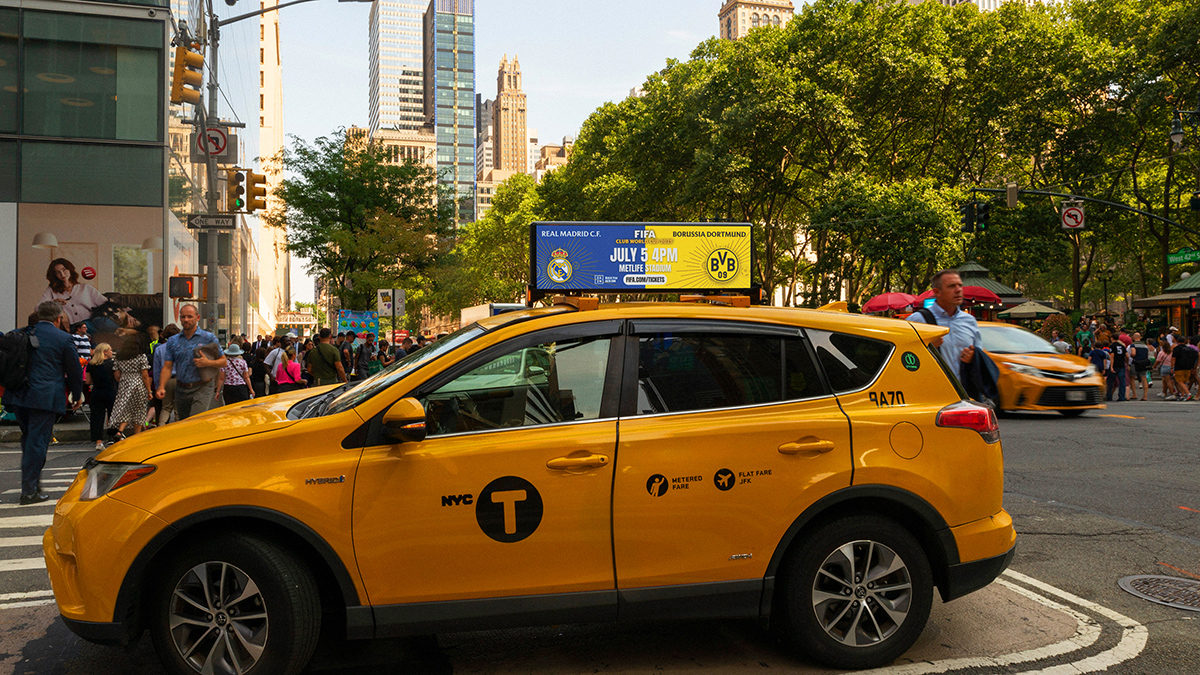
What Is Car Advertising?
Car advertising encompasses any form of advertising placed on or in a vehicle. It falls under the broader category of out-of-home (OOH) advertising and is sometimes classified as mobile OOH or transit advertising. The key formats include:
- Full vehicle wraps — Vinyl graphics covering the entire vehicle surface
- Partial wraps — Vinyl graphics covering specific sections (doors, hood, rear)
- Digital car-top displays — LED screens mounted on the vehicle roof
- Static car-top signs — Illuminated boxes or signs on the roof
- Magnetic signs — Removable magnetic panels on doors or body panels
- Window decals and perforated vinyl — Rear window or side window graphics
- Interior screens — Digital displays inside rideshare and taxi vehicles
Each format has different cost structures, impression profiles, and strategic applications. The best choice depends on your budget, campaign goals, and whether you are advertising on your own fleet or partnering with a third-party vehicle advertising network.
Car Advertising by the Numbers: Key Statistics
The effectiveness of car advertising is backed by extensive research from organizations including the Outdoor Advertising Association of America (OAAA), Nielsen, and 3M. Here are the numbers that matter:
| Metric | Value | Source |
|---|---|---|
| Daily impressions per vehicle | 40,000 – 70,000 | OAAA |
| Impressions per mile driven | 400 – 600 | Industry average |
| Annual views (intercity driving) | Up to 12 million | 3M Fleet Graphics Study |
| CPM (cost per thousand impressions) | $0.15 – $0.48 | OAAA / Nielsen |
| Message recall rate | 97% | vs. 19% for stationary ads |
| Attention vs. static billboards | 2.5x more attention | Nielsen OOH Study |
| Americans who notice vehicle graphics daily | 97% | OAAA |
| Noticed a wrapped vehicle in past month | 64% of U.S. adults | Nielsen |
| Business owners rating wraps as most effective local ad | 92% | Industry survey |
| Average ROI multiplier | 5:1 ($5.97 return per $1 spent) | Industry composite |
| Average payback period | 4.2 months | Industry average |
These numbers explain why vehicle wrap advertising has become the go-to local marketing tool for businesses ranging from single-vehicle operators to enterprise fleets with hundreds of cars.
Types of Car Advertising: Formats Explained
1. Full Vehicle Wraps
A full wrap covers every exterior surface of the vehicle — hood, roof, doors, fenders, bumpers, and trunk — with custom-printed vinyl graphics. It transforms the vehicle into a complete branded experience that is impossible to ignore on the road.
- Cost: $2,500 – $5,000 per vehicle (one-time)
- Lifespan: 5 – 7 years with proper maintenance
- Best for: Maximum impact, brand launches, fleet branding, businesses that want to make a bold statement
Full wraps are a one-time investment that delivers continuous advertising for years. At an average cost of $3,500 and a 5-year lifespan, the annual cost works out to just $700 per year — or roughly $1.92 per day — for 40,000+ daily impressions. That is an effective CPM of approximately $0.05, making it arguably the cheapest advertising medium in existence.
2. Partial Vehicle Wraps
Partial wraps cover strategic sections of the vehicle — typically the doors, rear quarter panels, hood, or tailgate. They offer strong visual impact at a lower cost than full wraps while preserving the vehicle's original paint.
- Cost: $1,200 – $2,500 per vehicle (one-time)
- Lifespan: 5 – 7 years
- Best for: Budget-conscious businesses, personal vehicles where full coverage is not desired, secondary fleet vehicles
3. Digital Car-Top Displays
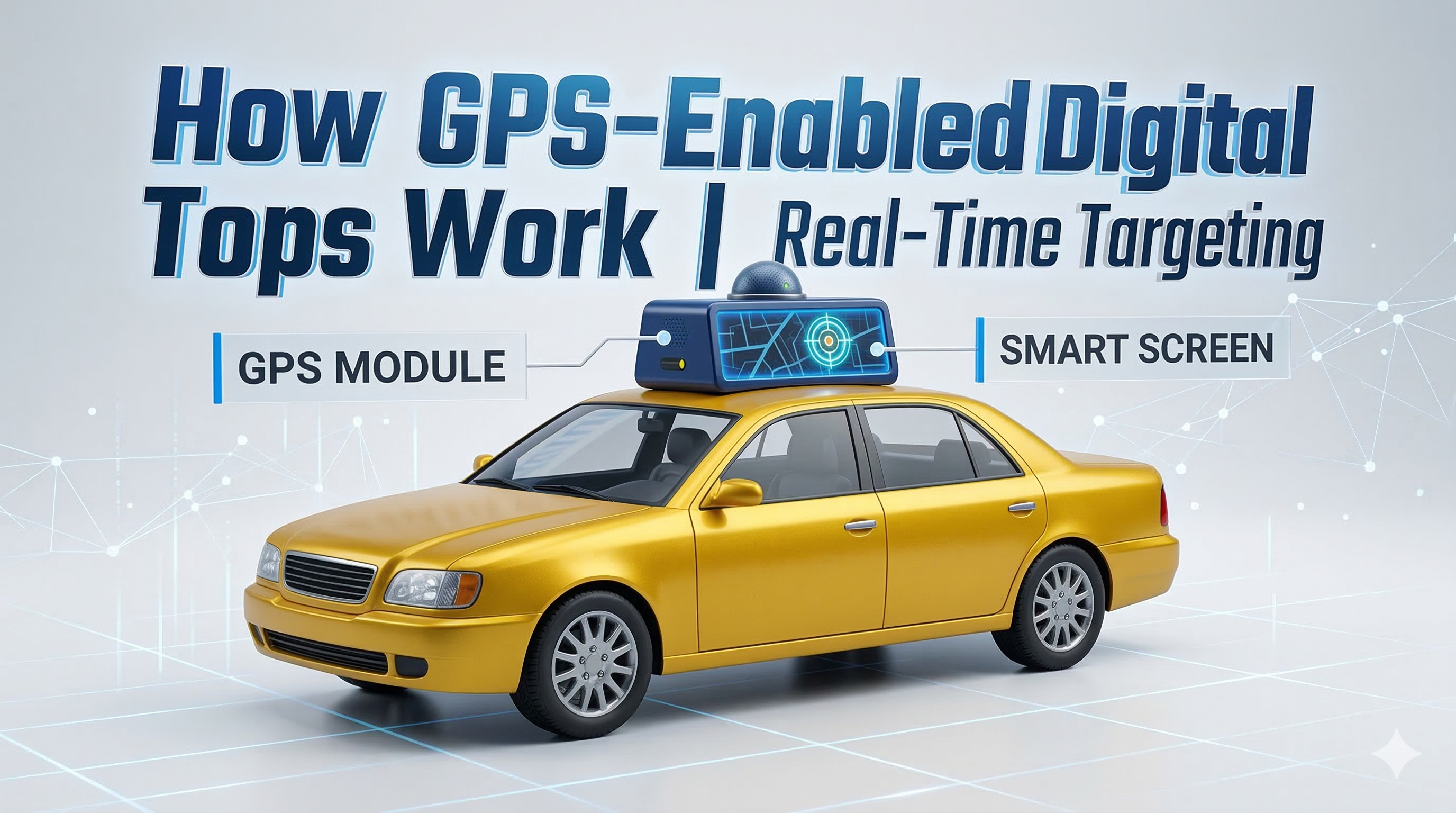
Digital car-top units are GPS-tracked LED screens mounted on the vehicle roof, capable of displaying multiple rotating ads with location-based targeting. This format has grown rapidly in the rideshare and taxi markets, operated by companies like Firefly, which runs one of the largest digital car-top networks in the United States.
- Cost: $1,000 – $2,500 per vehicle per month (for advertisers); drivers can earn $300 – $452 per month
- Best for: Geo-targeted campaigns, programmatic OOH buys, advertisers who need real-time measurement and attribution
4. Magnetic Signs and Removable Graphics
Magnetic door signs are the entry-level option for car advertising. They are removable, reusable, and cost-effective for small businesses that want to advertise during business hours and remove the signage during personal use.
- Cost: $50 – $200 per set (one-time)
- Lifespan: 2 – 3 years
- Best for: Small businesses, service providers (plumbers, electricians, cleaners), delivery drivers
5. Window Decals and Perforated Vinyl
Perforated vinyl (also called "one-way vision" film) allows graphics on the outside of the window while maintaining visibility from inside. Rear window decals are a popular, low-cost way to add advertising space without a full wrap.
- Cost: $150 – $400 per window (one-time)
- Lifespan: 3 – 5 years
- Best for: Supplementing a partial wrap, adding a website URL or phone number, ride-share drivers
Cost Comparison: Car Advertising vs. Other Channels
One of the most compelling arguments for car advertising is how it stacks up against other advertising channels on a cost-per-impression basis.
| Advertising Channel | Average CPM | Annual Cost (est.) | Notes |
|---|---|---|---|
| Vehicle wrap | $0.15 – $0.48 | $700/yr (amortized) | One-time cost, 5-7 year lifespan |
| Billboard (static) | $3.56 | $15,000 – $50,000/yr | Single location, no mobility |
| Transit advertising | $7.45 | $10,000 – $30,000/yr | Fixed routes |
| Digital billboard | $9 – $32 | $30,000 – $100,000+/yr | Shared rotation with other advertisers |
| Radio | $10 – $20 | $20,000 – $100,000/yr | Audio only, no visual branding |
| Television | $23.70 | $50,000 – $500,000+/yr | Broad reach but high cost, skippable |
| Magazine print | $21.46 | $10,000 – $50,000/yr | Declining readership |
| Social media ads | $6 – $15 | $5,000 – $50,000+/yr | Highly targeted but blocked/ignored |
Vehicle wraps deliver 7 to 50 times more impressions per dollar than any other major advertising format. The only channel that comes close in CPM efficiency is email marketing — but email lacks the physical-world brand presence that car advertising provides.
Pros of Car Advertising
1. Lowest Cost Per Impression in Advertising
At $0.15 – $0.48 CPM, vehicle wraps cost a fraction of every other major advertising channel. A $3,500 full wrap generates approximately 15 – 25 million impressions per year for 5+ years. No billboard, TV spot, or social media campaign comes close to that efficiency.
2. Non-Intrusive and Unskippable
Unlike digital ads that get blocked, TV commercials that get fast-forwarded, or direct mail that goes straight to the recycling bin, car advertising exists in the physical world where people naturally look. It does not interrupt — it simply appears in the viewer's environment as they go about their day. There is no skip button, no ad blocker, and no subscription tier that removes it.
3. 24/7 Exposure with Zero Recurring Cost
A vehicle wrap works every hour the car is on the road — and even when it is parked. There are no ongoing media fees, no cost-per-click charges, and no monthly platform subscriptions. The wrap is a fixed, one-time expense that delivers returns for years.
4. Hyper-Local Targeting (Organic)
A wrapped vehicle naturally advertises in the areas where the driver lives, works, and shops — which, for most local businesses, is exactly where their customers are. A plumber with a wrapped van advertises in the neighborhoods they serve every time they drive to a job. A restaurant with a wrapped delivery car promotes itself within a natural radius of the business. This organic geographic targeting happens automatically without any additional media spend.
5. Professional Brand Image
A well-designed vehicle wrap communicates professionalism, legitimacy, and investment in the business. Studies show that consumers perceive wrapped vehicles as belonging to more established and trustworthy companies. For service businesses especially — contractors, cleaning services, landscaping, catering — a branded vehicle is often the first impression a potential customer has of the business.
6. Paint Protection
An often-overlooked benefit: high-quality vinyl wraps protect the vehicle's original paint from UV damage, minor scratches, and road debris. When the wrap is eventually removed, the paint underneath is typically in better condition than it would have been without the wrap. This preserves the vehicle's resale value.
7. Highest Recall Rate of Any Ad Format
At 97% message recall, vehicle graphics crush every other advertising format. For comparison, stationary outdoor ads achieve only 19% recall. The movement, color, and proximity of a wrapped vehicle create a memorable impression that sticks.
Cons of Car Advertising
1. Limited Audience Targeting
Unlike digital advertising where you can target specific demographics, interests, and behaviors, traditional car advertising (wraps, magnets, decals) reaches everyone who happens to be near the vehicle. You cannot choose who sees your ad. Digital car-top displays mitigate this with GPS-based targeting, but static wraps are fundamentally broad-reach media.
2. Difficult to Measure Directly
Tracking the direct ROI of a vehicle wrap is harder than measuring digital ad performance. You cannot click a car wrap. While strategies like dedicated phone numbers, QR codes, unique landing pages, and promo codes help bridge this gap, attribution remains less precise than digital channels. Digital car-top platforms with GPS tracking and mobile device matching have solved this problem for their format, but traditional wraps still rely on indirect measurement.
3. Upfront Cost
A full vehicle wrap costs $2,500 – $5,000 upfront, which can be a significant investment for a small business or startup. While the long-term CPM is extremely low, the initial cash outlay is higher than starting a social media ad campaign or running a small Google Ads budget. Partial wraps and magnetic signs offer lower-cost entry points.
4. Design Limitations
A vehicle wrap has limited viewing time — typically 3 to 10 seconds as the vehicle passes. Your message must be instantly readable and memorable. Complex messaging, lengthy text, or subtle visuals do not work. The most effective car ads use bold colors, large text, a clear logo, and a simple call to action (phone number, website, or QR code). This is not the medium for nuanced storytelling.
5. Maintenance Requirements
Vehicle wraps require regular washing (ideally hand washing) and should avoid automated car washes with brushes that can lift edges. Minor damage from road debris, parking lot incidents, or weather can require spot repairs. In harsh climates with extreme sun, cold, or salt exposure, wrap lifespan may be shorter than the 5–7 year average.
6. Removal and Replacement
While professional wrap removal is clean and paint-safe, it takes time and costs $500 – $1,000+. If your branding changes frequently — new logos, new phone numbers, rebrands — the cost of replacement adds up. Businesses with stable branding get the most value from wraps.
7. Regulatory Considerations
Some cities and states have regulations regarding vehicle advertising, particularly for commercial vehicles, oversized graphics, or illuminated signs. Window tint and decal laws vary by state. Always check local regulations before applying wraps, especially to windows or adding rooftop signage.
Car Advertising ROI: What the Data Shows
The ROI case for car advertising is one of the strongest in the entire advertising industry:
- Average ROI multiplier: 5:1 — meaning every $1 invested returns approximately $5.97 in value
- Average payback period: 4.2 months — the wrap pays for itself in under 5 months through increased business
- Positive ROI achievement rate: Over 96% of vehicle wrap campaigns achieve positive ROI
- Cost efficiency: $1 spent on outdoor/vehicle advertising generates approximately $2.80 in sales (OAAA) — higher than the return for most other advertising channels
A 3M study tracking Snapple delivery trucks equipped with GPS units through two major metropolitan areas confirmed that fleet graphics deliver measurable, route-specific impressions that correlate with sales lift in the exposed zip codes. This was one of the first rigorous studies to connect vehicle advertising exposure to actual purchase behavior.
Best Practices for Effective Car Advertising
Design Rules
- Keep it simple: Your entire message should be readable in 3 seconds at 35 mph. One headline, one image, one call to action
- Go big on contrast: High-contrast color combinations (dark on light, or light on dark) ensure readability from a distance and in varying light conditions
- Prioritize the sides: The sides of the vehicle get the most viewing time in traffic. Put your most important information on the driver and passenger doors
- Include a phone number or URL: Make it large enough to read from 20 feet away. A QR code can supplement but should not replace a phone number or URL
- Use professional photography and graphics: Low-resolution images, clip art, and amateur design undermine credibility. Invest in professional design — it is the difference between looking like a Fortune 500 company and looking like a hobby business
Measurement Strategies
- Dedicated phone number: Use a unique phone number on the wrap that is not used anywhere else. Track all calls to that number as wrap-generated leads
- Unique landing page or URL: Create a specific URL (e.g., yourbusiness.com/drive) that only appears on the vehicle. Track all traffic to that page
- QR codes: Add a QR code that links to a promotional offer, landing page, or booking system. Track scans for direct engagement measurement
- "How did you hear about us?": Ask every new customer. Vehicle sightings are a surprisingly common answer for local businesses with wrapped vehicles
- Promo codes: Include a vehicle-specific promo code (e.g., "DRIVE20") on the wrap. Track redemptions for direct attribution
Fleet Advertising vs. Single Vehicle: What to Expect
| Factor | Single Vehicle | Fleet (5+ Vehicles) |
|---|---|---|
| Total investment | $2,500 – $5,000 | $10,000 – $25,000+ |
| Daily impressions | 40,000 – 70,000 | 200,000 – 350,000+ |
| Geographic coverage | Limited to driver's routes | Broad coverage across service area |
| Brand impact | Good local awareness | Dominant local presence; fleet creates perception of a large, established company |
| Consistency | Important but manageable | Critical — all vehicles must match for brand cohesion |
| Volume discount | None | Typically 10–20% discount on 5+ vehicles |
Fleet advertising has a compounding effect. Research shows that consumers who see the same branded vehicle multiple times develop significantly higher brand recall and trust than those who see it once. A 5-vehicle fleet in a mid-size city can achieve the kind of omnipresent brand visibility that would cost tens of thousands per month in traditional media.
Car Advertising in 2026: Emerging Trends
- Programmatic DOOH integration: Digital car-top platforms now plug into programmatic ad exchanges, allowing advertisers to buy vehicle-based impressions alongside display, social, and CTV campaigns through a single DSP
- EV-specific wrap materials: As electric vehicle adoption grows, wrap manufacturers have developed materials specifically engineered for EV body panels and coatings, including Tesla-compatible wraps that do not void warranty
- AR-activated wraps: Some brands are experimenting with wraps that include augmented reality triggers — point your phone's camera at the vehicle and an interactive experience launches
- Sustainability messaging: Eco-friendly wrap materials (PVC-free, recyclable vinyl) are increasingly available, allowing brands to align their vehicle advertising with sustainability commitments
- Rideshare advertising networks: Uber, Lyft, and third-party networks have created scaled car advertising programs where ride-share drivers earn $300–$450/month by carrying rooftop or wrap advertising. This has opened up car advertising inventory in every major U.S. city
- AI-powered creative optimization: Digital car-top platforms are beginning to use AI to test and optimize creative variations in real time, automatically shifting to the best-performing ad based on location, time, and audience response data
Frequently Asked Questions
How much does it cost to wrap a car for advertising?
A full vehicle wrap costs $2,500 – $5,000 depending on the vehicle size, design complexity, and wrap quality. Partial wraps cost $1,200 – $2,500. These are one-time costs — the wrap lasts 5 to 7 years with proper care, making the annual cost as low as $500 – $700 per year.
Do car wraps damage the paint?
No — high-quality vinyl wraps actually protect the paint from UV damage, minor scratches, and road debris. When professionally removed, the paint underneath is typically in excellent condition. However, wraps applied over damaged or poorly repainted surfaces may cause issues during removal.
How many impressions does a wrapped car get per day?
A single wrapped vehicle generates 40,000 to 70,000 impressions per day in urban areas, and 400 to 600 impressions per mile driven. In high-traffic areas like New York City, daily impression counts can exceed 70,000.
What is the ROI of car advertising?
The average ROI for vehicle wrap advertising is approximately 5:1, meaning every dollar invested returns about $5.97 in value. Over 96% of wrap campaigns achieve positive ROI, with an average payback period of 4.2 months.
Can I get paid to put ads on my car?
Yes — several companies pay drivers to carry advertising on their vehicles. Rideshare drivers with companies like Firefly can earn $300 – $452 per month with digital car-top units. Wrap-based programs also exist, though drivers should be cautious of scams and only work with verified companies.
How long does a vehicle wrap last?
A professionally installed high-quality vinyl wrap lasts 5 to 7 years. Factors that affect lifespan include climate (extreme sun and cold reduce lifespan), parking conditions (garage-kept vehicles fare better), maintenance (regular hand washing extends life), and material quality (premium cast vinyl outlasts calendered vinyl).
Is car advertising better than billboard advertising?
In terms of cost efficiency, yes — car advertising delivers CPMs of $0.15 – $0.48, compared to $3.56 for static billboards and $9 – $32 for digital billboards. Car advertising also provides geographic mobility, reaching multiple neighborhoods and routes rather than a single fixed location. However, billboards offer a larger creative canvas and higher impression volumes at a single high-traffic point. The ideal strategy often combines both.
What makes a good car wrap design?
The best car wrap designs follow the "3-second rule" — your entire message should be readable and understood in 3 seconds. Use bold colors, high contrast, a large logo, minimal text, and one clear call to action (phone number, website, or QR code). Avoid clutter, small text, and complex imagery. Professional design by an experienced vehicle wrap designer is strongly recommended.
The Bottom Line
Car advertising — whether through vinyl wraps, digital car-top displays, or magnetic signs — delivers the lowest cost per impression of any advertising format and achieves the highest recall rates in the industry. For local businesses, it is the single most efficient way to build brand awareness in your service area. For national brands, fleet advertising and digital car-top networks provide scalable, measurable reach across multiple markets.
The numbers do not lie: $0.15 – $0.48 CPM, 97% recall, 5:1 ROI, and a payback period of just over 4 months. In a world where advertising costs continue to rise and consumer attention grows harder to capture, a medium that physically places your brand in front of tens of thousands of people every day — with no recurring cost — is an opportunity that every business should seriously consider.